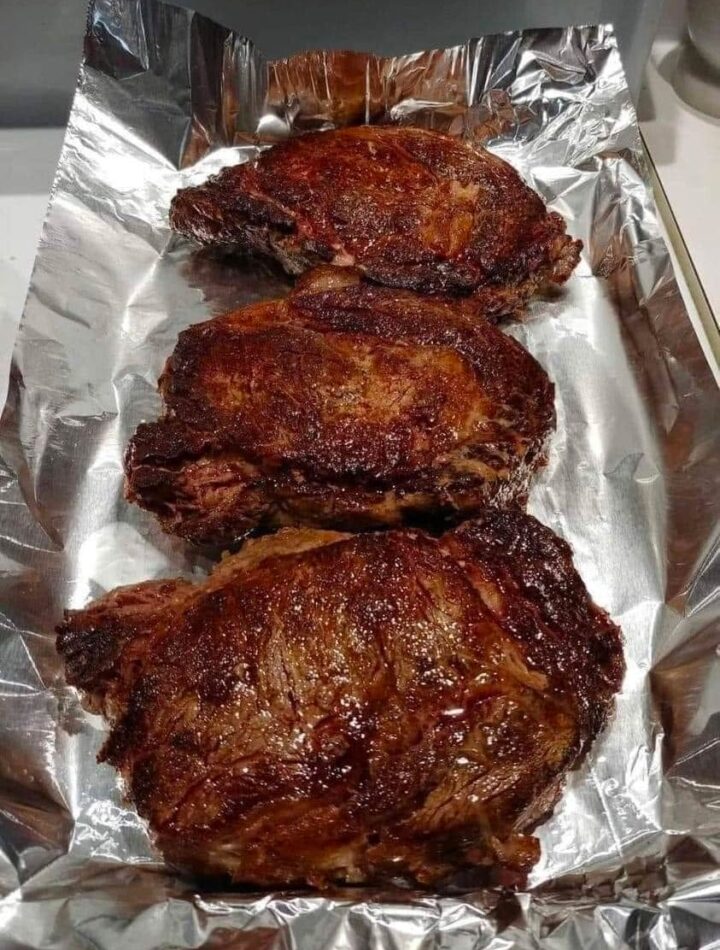
Juicy Oven-Roasted Ribeye Steak Recipe
If you love a thick, juicy steak with a beautifully browned crust and plenty of rich, beefy flavor, this oven-roasted ribeye steak recipe is one to keep in your collection. Ribeye is known for its marbling, which helps create a tender, flavorful steak when cooked properly.
This recipe uses simple seasonings, a hot skillet, and an oven to produce steaks with a deliciously browned exterior. It is perfect for a weekend dinner, a special occasion, or whenever you want a steakhouse-style meal at home.
You do not need a long list of ingredients or complicated cooking techniques. With good-quality ribeye steaks, a little seasoning, and careful attention to temperature, you can prepare an impressive meal in your own kitchen.
Why You Will Love This Ribeye Steak Recipe
- Rich flavor: Ribeye has natural marbling that gives it a delicious beefy taste.
- Simple ingredients: Salt, pepper, garlic, and a little oil are all you need to get started.
- Beautiful crust: Searing the steaks helps create a deeply browned exterior.
- Easy to customize: Add butter, rosemary, thyme, or your favorite steak seasoning.
- Perfect for dinner: Serve these steaks with roasted potatoes, vegetables, or a fresh salad.
Ingredients
This recipe serves 3 to 4 people.
- 3 large ribeye steaks, approximately 1 to 1½ inches thick
- 2 tablespoons olive oil or another high-heat cooking oil
- 1½ teaspoons kosher salt, or to taste
- 1 teaspoon freshly ground black pepper
- 1 teaspoon garlic powder
- 1 teaspoon onion powder
- 1 teaspoon smoked paprika, optional
- 2 tablespoons unsalted butter
- 3 garlic cloves, lightly crushed
- 2 sprigs fresh rosemary or thyme, optional
Instructions
Step 1: Prepare the Steaks
Remove the ribeye steaks from the refrigerator and pat them dry with paper towels. Removing surface moisture helps the meat develop a better crust during searing.
Season both sides generously with salt, black pepper, garlic powder, onion powder, and smoked paprika if using.
For the best results, let the steaks sit at room temperature for about 20 to 30 minutes while you prepare the oven and skillet. Do not leave raw meat unrefrigerated for more than two hours in total, or one hour when the temperature is above 90°F (32°C).
Step 2: Preheat the Oven
Preheat your oven to 400°F (200°C).
Choose a heavy, oven-safe skillet, preferably cast iron. A heavy skillet retains heat well and helps brown the steaks evenly.
If you do not have an oven-safe skillet, you can sear the steaks in a regular skillet and transfer them to a suitable baking dish for the oven.
Step 3: Sear the Ribeye Steaks
Place the skillet over medium-high to high heat and allow it to become very hot.
Add the olive oil and carefully place the steaks in the skillet. Avoid overcrowding the pan; if necessary, cook them in batches.
Sear the steaks for approximately 2 to 3 minutes per side, depending on their thickness and the heat of your skillet. The surface should develop a deep brown crust.
Use tongs to turn the steaks rather than piercing them with a fork.
If you are cooking in batches, allow the skillet to regain its heat between batches.
Step 4: Add Butter and Garlic
Reduce the heat slightly and add the butter, crushed garlic cloves, and rosemary or thyme if desired.
As the butter melts, carefully spoon it over the steaks for about 30 to 60 seconds.
The butter adds richness, while the garlic and herbs contribute extra aroma and flavor.
Be careful not to burn the garlic, as burnt garlic can taste bitter.
Step 5: Finish Cooking in the Oven
Transfer the oven-safe skillet to the preheated oven.
Roast the steaks until they reach your desired internal temperature. The cooking time will vary depending on their thickness, the amount of searing, and how you prefer your steak.
Begin checking the temperature after approximately 3 to 5 minutes in the oven, then continue cooking as needed.
For food safety, the USDA recommends cooking whole beef steaks to a minimum internal temperature of 145°F (63°C), followed by a three-minute rest.
Use an instant-read thermometer inserted into the thickest part of each steak to check the temperature.
Avoid relying on color alone to determine whether the meat is safely cooked.
Step 6: Let the Steaks Rest
Remove the steaks from the oven and transfer them to a clean plate or cutting board.
Let them rest for at least 3 minutes before serving. A slightly longer rest of around 5 to 10 minutes can also work well for thick steaks.
Resting allows the juices to settle and helps keep the meat moist when sliced.
Spoon some of the melted garlic butter over the steaks before serving, if desired.
Tips for the Best Ribeye Steaks
Choose well-marbled meat. Fine streaks of fat throughout the ribeye contribute to its flavor and tenderness.
Dry the surface thoroughly. Moisture on the outside of the steak can interfere with browning.
Use a hot skillet. Properly preheating the pan helps create a rich, browned crust.
Avoid overcrowding. Cooking too many steaks in one pan can lower the temperature and prevent good searing.
Use a meat thermometer. Steak thickness and oven performance vary, so measuring the internal temperature is more reliable than following a fixed cooking time.
Rest before serving. Give the steaks a few minutes to rest before cutting into them.
What to Serve with Ribeye Steak
These oven-roasted ribeye steaks pair well with a variety of sides.
- Garlic mashed potatoes
- Crispy roasted potatoes
- Roasted carrots or green beans
- Buttered corn
- Creamed spinach
- Fresh garden salad
- Roasted mushrooms
- Garlic bread
For a classic steakhouse dinner, serve the steaks with mashed potatoes and roasted vegetables. For a simpler meal, pair them with a fresh salad and baked potatoes.
How to Store Leftover Steak
Allow leftover steak to cool slightly, then refrigerate it in an airtight container within two hours of cooking.
Cooked steak can generally be stored in the refrigerator for 3 to 4 days.
To reheat, place the steak in a covered oven-safe dish with a small amount of beef broth or water. Warm it in a low oven until heated through, taking care not to dry out the meat.
You can also slice leftover ribeye and use it in steak sandwiches, wraps, salads, or rice bowls.
Frequently Asked Questions
Can I cook ribeye steaks without an oven-safe skillet?
Yes. Sear the steaks in a regular skillet, then transfer them to a baking dish and finish cooking in the oven.
Should I cover the steaks while roasting?
No. Leaving them uncovered helps preserve the browned exterior.
Can I use fresh garlic instead of garlic powder?
Yes. Fresh garlic works well, especially when added with butter near the end of searing. Avoid adding minced garlic too early over very high heat because it can burn.
How do I know when the steaks are done?
The most reliable method is to use an instant-read meat thermometer. Check the thickest portion of each steak and follow the recommended safe internal temperature.
Can I prepare the steaks ahead of time?
You can season the steaks in advance and keep them refrigerated. Before cooking, pat the surface dry if needed and proceed with the searing and roasting steps.
Final Thoughts
These oven-roasted ribeye steaks are a wonderful choice when you want a satisfying, flavorful beef dinner without complicated preparation. A simple blend of seasonings, a hot skillet, and a short finish in the oven help create a deeply browned exterior and tender, juicy meat.
Serve them fresh from the oven with your favorite sides, add a little garlic butter, and enjoy a hearty homemade steak dinner.