Homemade Pickled Tomatoes and Cauliflower Recipe
If you love homemade pickles with a delicious tangy flavor and a satisfying crunch, these homemade pickled tomatoes and cauliflower are worth trying. This traditional-style vegetable pickle combines fresh tomatoes, crunchy cauliflower, green peppers, garlic, and a flavorful pickling brine. The colorful vegetables look beautiful in glass jars and make a delicious addition to everyday meals.
These mixed vegetable pickles are perfect for serving alongside rice, grilled meat, sandwiches, curries, and other favorite dishes. The best part is that you can prepare them with simple ingredients and customize the vegetables according to your taste.
Whether you enjoy homemade preserves or want to try something different with fresh vegetables, this recipe is a great way to create a flavorful pickle at home.
What Are Pickled Tomatoes and Cauliflower?
Pickled tomatoes and cauliflower are vegetables preserved in a seasoned liquid, usually made with vinegar, water, salt, and spices. Depending on the recipe, the vegetables can develop a sour, salty, slightly spicy flavor that complements many meals.
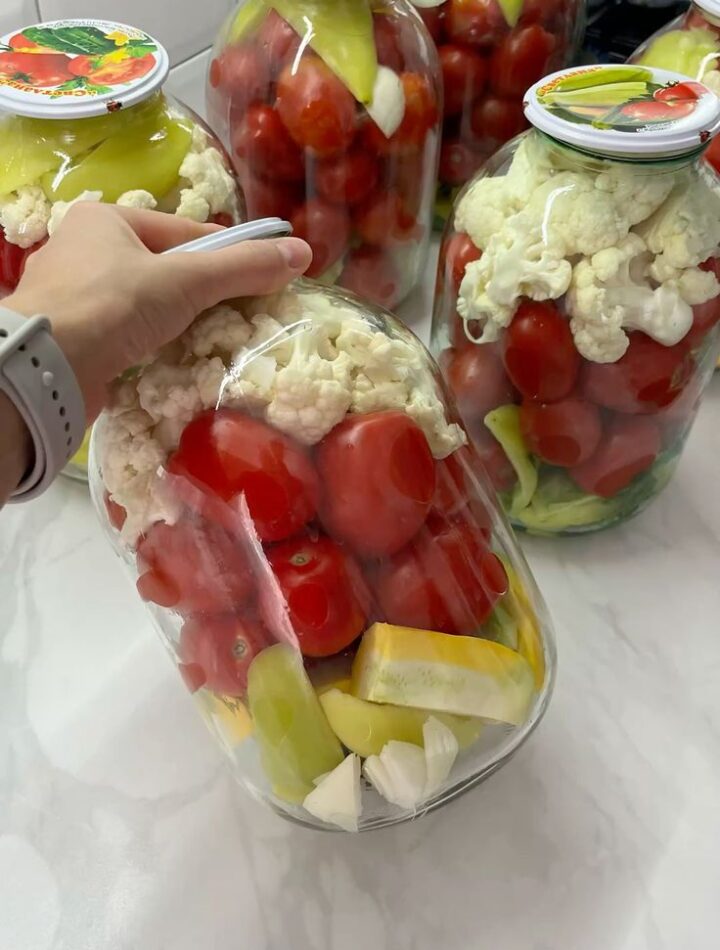
In this recipe, whole tomatoes are combined with cauliflower florets, green peppers, garlic, and optional lemon or other vegetables. The ingredients are packed into glass jars and covered with pickling brine.
The result is a colorful mixture of vegetables with a bold flavor. You can make the pickle mild or spicy by adjusting the peppers and seasonings.
Ingredients
The following ingredients make approximately two medium-sized jars, depending on the size of your jars and the vegetables you use.
For the Vegetables
- 2 pounds firm, ripe tomatoes
- 1 medium head of cauliflower, cut into florets
- 3–4 green chili peppers or mild green peppers
- 6–8 garlic cloves, peeled
- 1 small lemon, cut into wedges (optional)
- 1 small carrot, sliced (optional)
For the Pickling Brine
- 2 cups white vinegar with 5% acidity
- 2 cups water
- 2 tablespoons pickling salt
- 1 teaspoon whole black peppercorns
- 1 teaspoon coriander seeds (optional)
- 1 teaspoon mustard seeds (optional)
- 1 teaspoon sugar (optional)
Important: These quantities are for a refrigerator pickle, not a shelf-stable canned product. For safe room-temperature storage, use a tested canning recipe with the correct vinegar acidity, ingredient proportions, jar preparation, and processing time.
Instructions
Step 1: Prepare the Vegetables
Start by washing the tomatoes, cauliflower, peppers, and any additional vegetables thoroughly under running water.
Choose firm tomatoes that are free from bruises, mold, or soft spots. Small or medium tomatoes are particularly convenient because they fit easily into jars.
Cut the cauliflower into bite-sized florets. Remove any damaged parts and rinse the florets carefully to remove dirt.
Peel the garlic cloves and wash the green peppers. You can leave the peppers whole or cut them into smaller pieces. If you prefer a stronger spicy flavor, make a small slit in each pepper.
Allow the vegetables to drain well before packing them into the jars.
Step 2: Prepare the Glass Jars
Wash the glass jars and their lids with hot, soapy water, then rinse them thoroughly.
For refrigerator pickles, use clean jars suitable for food storage. Make sure there are no cracks or damaged areas.
Keep the jars ready on a clean surface while you prepare the brine.
Remember that clean jars are important, but cleaning alone does not make a pickle safe for long-term storage at room temperature.
Step 3: Make the Pickling Brine
Pour the vinegar and water into a stainless-steel saucepan.
Add the pickling salt, black peppercorns, coriander seeds, mustard seeds, and sugar if you are using it.
Bring the mixture to a boil, stirring until the salt and sugar dissolve completely.
Let the brine simmer briefly, then remove it from the heat.
Allow it to cool until it is no longer boiling before pouring it into the jars. Follow appropriate food-handling guidance for the ingredients and refrigerator-pickling process.
Step 4: Fill the Jars
Begin arranging the vegetables inside the clean jars.
Place some cauliflower florets at the bottom, followed by whole tomatoes, green peppers, and garlic cloves. Continue layering until the jars are filled, leaving some space at the top.
Try to distribute the vegetables evenly so that every jar contains a colorful mixture.
Avoid crushing the tomatoes or packing the vegetables so tightly that the brine cannot circulate around them.
Step 5: Add the Brine
Carefully pour the prepared vinegar brine over the vegetables.
Make sure the vegetables are completely covered by the liquid. Remove any trapped air pockets with a clean utensil, if necessary, and maintain a little space at the top of each jar.
Allow the mixture to cool if it is still warm.
Close the jars with clean lids and place them in the refrigerator.
Step 6: Let the Flavors Develop
For the best flavor, allow the vegetables to pickle in the refrigerator for at least 24–48 hours before tasting.
The flavor will continue to develop as the vegetables sit in the brine. The tomatoes will absorb some of the tanginess, while the cauliflower and peppers will take on the flavors of the garlic and spices.
Always keep these refrigerator pickles chilled. Do not store this recipe in the pantry or assume that a sealed lid makes it shelf-stable.
Tips for the Best Homemade Vegetable Pickles
Choose firm vegetables: Firm tomatoes and fresh cauliflower generally hold their texture better than overripe or damaged produce.
Use uniform cauliflower florets: Cutting the cauliflower into similar-sized pieces helps the vegetables pickle more evenly.
Adjust the spice level: Use mild green peppers for a gentler flavor or hot chili peppers if you enjoy extra heat.
Keep everything submerged: Vegetables exposed above the brine may spoil more quickly. Use a suitable food-safe weight if needed.
Use the correct vinegar: For this refrigerator recipe, use commercially produced white vinegar with 5% acidity. Do not substitute homemade vinegar or reduce the vinegar concentration.
Avoid guessing about preservation: A refrigerator pickle is different from a shelf-stable canned pickle. Never rely on appearance, smell, or a tight lid alone to determine whether improperly stored pickles are safe.
What to Serve with Pickled Tomatoes and Cauliflower
These tangy vegetables pair well with many meals.
Serve them alongside rice dishes, roasted chicken, grilled meat, kebabs, or sandwiches. They can also add a refreshing contrast to rich curries and other savory foods.
If you enjoy traditional homemade meals, keep a jar in the refrigerator so you can serve a few pieces whenever you want something sour and flavorful with lunch or dinner.
The colorful mixture also makes an attractive addition to a homemade appetizer platter.
How to Store Homemade Pickles
Store these pickled vegetables in the refrigerator at 40°F (4°C) or below.
Use clean utensils whenever you remove vegetables from the jar, and return the jar to the refrigerator promptly after serving.
Because this recipe has not been tested for shelf-stable canning, do not keep it at room temperature. For the safest storage period, follow a reputable food-safety recipe specifically developed for refrigerator pickles.
Discard the pickles if you notice mold, an unusual appearance, a damaged container, or other signs of spoilage. Do not taste questionable food to check whether it is safe.
Frequently Asked Questions
Can I use green tomatoes instead of red tomatoes?
Yes, green tomatoes can be used in many pickling recipes. However, they have a firmer texture and a different flavor. Use a recipe designed for the type of tomatoes you choose.
Can I add carrots or cucumbers?
Yes, carrots and cucumbers are common additions to mixed vegetable refrigerator pickles. Cut them into suitable pieces and make sure they remain completely covered by the brine.
How long should I wait before eating the pickles?
For this refrigerator version, wait at least 24–48 hours to allow the flavors to develop. Larger whole tomatoes may take longer to absorb the brine.
Do these pickles need to be refrigerated?
Yes. This particular recipe is intended for refrigerator storage. A tested canning recipe is necessary if you want to preserve vegetables safely at room temperature.
Final Thoughts
Homemade pickled tomatoes and cauliflower are a flavorful way to enjoy a colorful combination of vegetables. With firm tomatoes, fresh cauliflower, green peppers, garlic, and a tangy vinegar brine, you can prepare a delicious refrigerator pickle using everyday ingredients.
Serve it with your favorite homemade meals, experiment with different vegetable combinations, and adjust the seasonings to suit your taste.
If you enjoy tangy, savory side dishes, this simple refrigerator pickle recipe is a wonderful addition to your collection of homemade recipes.